Tuesday, November 29, 2011

Came Out Swinging: The Words of Dan "Soupy" Campbell

It seems every time that there is an artist that connects on a grandiose level and can actively relate with fans, people are quick to apply the label: "voice of a generation". Elvis, The Beatles, Kurt Cobain, those are the prominent candidates for the title of their respective generations. If you really look at the timeline of music, each generation would have about five "voices". But the current culture of youth and rebellion are prone to these sorts of discussions. During a time of continental recession, economic power struggles, and worldwide protest; people seem to be struggling to grasp onto hope and lack an active voice to represent the voiceless. Even the people who proceed to stay introverted and fail to grasp the environment around them still suffer the personal struggles that have plagued the most inspiring individuals. Once upon a time, people believed that their prince would appear and save them from the hardship plaguing their hopeful mentality, but those times come and go with age. Then there comes a man that singlehandedly shares his thoughts and fears with you one second, then shares his loves and hopes the next.

Don't get me wrong, I'm not going to shield my admiration and reverence for Daniel Campbell, and I'm certainly not referring to him as the voice of this generation. I don't claim to be the epitome of my, or any generation, but if there can be one person that I am able to relate to and appreciate, then perhaps others have the same beliefs about the same person. So why in a world with intellectuals, millionaires, and revolutionaries does one musician possess so much influence? It could be the way that he speaks: sounding like a very modest and unobtrusive man with prominent mentalities. Maybe it's the way that he acts on stage: exploring every inch of the stage and slightly more beyond, basking in the crowd's immense support and audio reproduction of every last word he sings. There's a chance it's just his personality: a soft-spoken English graduate who likes fantasy football, professional wrestling, and punk music. Or, you know, it could be his writing.

Growing up in suburban Philadelphia, Dan "Soupy" Campbell was just another kid with broad aspirations. He became the lead singer of a band that became known as The Wonder Years. After two years and two splits, the Wonder Years released Get Stoked On It!, a collection of whimsical keyboard infused pop-punk songs that Campbell now refers to as "fucking abysmal" and refuses to play songs from. The fallout from the album has led Campbell to have great disdain for "seven inch kids"--a play on the old EP kids adage for fans who constantly say "I was listening to this band when (insert obscure release here)" and claim a clearly inferior album is band's finest. So how has a guy who made a very capricious (and in retrospect, very comedic) debut, become a talking idol? The change is found on the next Wonder Years release, a four-song EP including one instrumental, Won't Be Pathetic Forever.

The second track "Solo and Chewy: Holdin' It Down" is where the change is immediately noticed, blending together the effervescent mentality on their debut and a biographical self-analysis. Then there are two songs that give you a clear representation of where the band is headed. The title track speaks of a discontent and sorrowful love-hate relationship with the city around him, culminating in the band chanting "I fucking love this town / I fucking hate this town". Along with the melancholy comes the optimistic, the words resonating whenever Soupy sings "I refuse to sink". Then there's "You're Not Salinger. Get Over It", the middle finger to people who are holding society back from its natural evolution. The track also serves as a helpful note to those who listen, with the band chanting "Chin up and we'll drown a little slower" at the end of the song. This new pessimist-optimist back-and-forth worked on three songs, but how would it stand up on a full-length? The world found out on The Upsides.

Soupy stated that the theme for their new full-length would be about facing obstacles and not allowing the people or troubles you face daily to get you down. That theme culminates on the lead-off track of an album. No matter if it's an instrumental, poetic introduction, or a straight for-the-throat starting point. "My Last Semester" serves as a picture of the college experience from today's perspective. The first thing you hear on The Upsides is Soupy singing the theme of the entire album: "I'm not sad anymore, I'm just tired of the place. The weight of the world would be okay if it would pick a shoulder to lean on so I could stand up straight." The soft, subtle singing quickly erupts with the rest of the song, but the honesty never waivers. In the follow-up song, "Logan Circle", Soupy expresses to us that he finds hope out of no hope at all and quickly conveys that optimism with his opening line: "They turned on the fountain today at Logan Circle, I felt something in me change".

Of course with playing in a touring band come the struggles with being on the road and having to put yourself out there in relation to the fans. In "New Year's Eve With Carl Weathers" Soupy speaks about the pains the road takes on someone and how the good can come from that, while "Hotels And Brothels" is about the European tour that The Wonder Years was on and the longing for a home that occurred while being so far away from it. The tracks "Melrose Diner" and "Hey Thanks" are direct letters to an ex-girlfriend who Soupy says has the kindest heart, but still the realization of seeing her embrace another man is very unnerving. Having said all of that, there are songs on the album that Soupy doesn't pull punches on. "This Party Sucks" is a statement on the current culture of the party scene, referencing the people as lifeless and refusing to take part in a land of excess where the participants are all virtually comatose. Nothing on that song, however, can compare with the non-stop ruthless verbal onslaught that Campbell delivers on "Dynamite Shovel". On this 64 second sonic attack, Soupy delivers the verbal middle-finger to "people who use religion as a crutch for hatred and bigotry". In one of the selected phrases, Campbell says: "You can hide behind a bible, but we still know you're fucks. Inbreeding can claim this one, so chalk it up. These small town minds stay small".

The last pledge of hope that Soupy delivers to us on The Upsides, a semi-concept album about--what Soupy would later say--"not about forcing happiness, it's about not letting sadness win", is "Washington Square Park". Campbell interrupts a blistering guitar riff on the song with the first lines: "I'm looking for the upsides to these panic attack nights, while I'm staying in eating take-out food by T.V. light". By the end of the song Soupy has convinced us that despite being in direct competition with your thinking patterns, everything eventually improves and you would then see the world in a brighter light. With one album, Dan Campbell not only relates to the masses, but helps them with his own set of inspirational material. In the ultimate show of solidarity, the album closes with a group of friends singing the same message that started the album and became the motto for fan base: "I'm not sad anymore, I'm just tired of this place. If this year would just end, I think we'd all be okay".

The next year was spent on the road, with The Wonder Years hopping on tours with the likes of Streetlight Manifesto, New Found Glory, Set Your Goals, Comeback Kid, and an Australian tour with Tonight Alive. It was during this time that they started writing the follow-up to their breakthrough success album. A pivotal European tour with Good Charlotte and Four Years Strong was the last foreign tour that the band embarked on, providing a larger overseas audience and Dan Campbell some new challenges to face. Finally, a short tour with Fireworks and Such Gold was arranged, where the band debut a few new songs and finished writing the new record. On that tour, Such Gold and Fireworks were forced to drop off and This Time Next Year joined to finish out the rest of the leg. It was shortly after the tour completed that the band announced they would be releasing a new album in the summer that is essentially a love letter to Alan Ginsberg and a staple in time of where the band was mentally. In the same moment we were introduced to Suburbia: I've Given You All And Now I'm Nothing.

From the very start, Dan Campbell was unapologetic and unwavering in his admiration for Ginsberg. When asked about his inspiration, Campbell would essentially go on rants about how Ginsberg's writings and musings would be almost identical to today's culture and his personal mental culture. Putting his labor of love together would spawn a deeply personal album that is, also musically, the most adventurous record the band has ever released. From the moment you hit play or drop the needle on the record, all of the emphatic energy strikes. The first noises stressed on the record is the audio tape of Ginsberg's "America" (from which the title of the album is based), with the lines being "My mind is made up" and "There's going to be trouble", repeated. Soupy breaks through the building guitars with a furious passion on a song about the exhaustion of touring and the adjustments made when the touring stops. Summarizing the experience in the lines: "I spent a whole year in airports and the floor feels like home" and "I'm running on empty and the late nights and the long drives start to get to me, I'm just so tired", Soupy explains his position with nothing more than a voice and his attempt at self-explanation. No part of the song ever waivers from the brutal honesty of his journey, especially the closing line of the chorus: "I spent this year as a ghost and I'm not sure where home is anymore".

A subject on Upsides was exploring the relationship of an ex-girlfriend ("Melrose Diner", "Hey Thanks"), also a subject that doesn't go untouched on Suburbia. "Woke Up Older" takes the listener through a journey is almost more about maturity and rationalization than about any girl. Also, Soupy blends some of his personal affects into the song (Bukowski novel, Blacklisted LP) and contests that the song is also a love letter to The Mountain Goats. All of those subjects are blended together to make a personal time-capsule into a song about a girl, "Hey Jess, I watched you wake up and get dressed. Left the room, reseeded like my hairline". The next song to appear on the album is possibly the most directly biographical of the album. Referencing songs from Upsides, Soupy tells us that some people missed the point of the previous album. In interviews and on the album, Campbell tells us that his last record wasn't about "forcing happiness, it's about not letting sadness win". On "Local Man Ruins Everything" Soupy expresses how his depression returned with new problems and relapsing issues.

The short "Suburbia", is a trip through the hometown that Soupy grew up knowing but after years of touring has changed dramatically. In this 51-second song, Campbell expresses to us that everything changes and we can't stay dormant. Picking the tempo up again "My Life As A Pigeon", there is different sediment about being in a band than we've heard from Campbell in the past. Whenever you hear him talk about his fans and the life of touring, Soupy will be the first to tell you that there is no experience like it and that all the fans keep him grounded and loved. On this track, Campbell deals with the negative aspect of the people who will shun you out, a new attitude that we hadn't seen or heard from Soupy before. The following track takes a complete turn and talks about the fun of socializing and making bad decisions with friends. Soupy explains that "Summers In PA" is as simple as you can take life, there's no feeling like being with good friends and making bad decisions. Now, we see the most controversial track on the album, "I Won't Say The Lord's Prayer". On this song, Campbell writes his thoughts about religion, saying that he means no disrespect to the friends he has who are religious. In Christianity, one of the laws is there is no other god than yours, Soupy pleads that he is making the same sort of stance but with no god of his own. The song is well written and I will not quote it, for it is better in full context.

On the song "Coffee Eyes", Soupy goes through a run of nostalgia for the place where he grew up, and talks about the people who made it special for him. That subject matter is something that we can all understand and sympathize with. "I've Given You All" sets a scene more than it is a song, with Campbell telling us a story about an old homeless war veteran that was beaten to death in the park around his neighborhood. Next there's "Don't Let Me Cave In", a song about how you dream of one day moving away and getting to where you think that you belong, but in some ways the place you are at was where you belonged all along. Taking cues from his real-life struggle with possibly moving from Philadelphia to Chicago, Soupy lays out his situation and inevitably touches base with everyone who has experienced the same thing. "You Made Me Want To Be A Saint" is a touching song written about a friend who passed away while the band was on tour in August of 2010, relating to many who have suffered through the same experience. The following "Hoodie Weather" blends a feeling of no matter where you are there will be problems to face and you have to face them head on with one of maturing. The stand-out line "Growing up means watching my heroes turn human in front of me. The songs we wrote at 18 seem short sided and naive...as fucked as this place got, it made me, me" incorporates all of its parts into a stunningly touching line of writing.

Finally, there is "Now I'm Nothing", a song that encompasses the entire back catalog and experiences the band and Campbell have endured. The track is quotes Ginsberg's poem "America" many times, including the last line "I'm putting my shoulder to the wheel". As a whole, the song serves as a status update of where the band, and Soupy, is at in their music and mentally. Despite the entire album being deeply personal, this song is the culmination of everything that came before it and expresses a great sense of optimism drenched in sorrow, and is the most adventurous song that Soupy has written to date.

In a way, people have become turned off by how autobiographical and honest Dan Campbell is with his writing. They have hurled hatred towards the band and what Soupy stands for as a whole. Some see a man standing tall with his friends at his side and emotions held in check with emotionally powered lyrics as a common occurrence and dismiss him as the a character who is no more special than the average singer in a pop-punk band. Others have said that Soupy's writing was at its best when he wasn't writing about his own personal problems and that his lyrics were better when whimsical. All of those people dismiss the progress of a human being and reject the notion of supporting a man who plays in a "mediocre-to-shitty pop-punk band". Speaking honestly, as he always does, Dan "Soupy" Campbell wouldn't have it any other way.

Wednesday, October 19, 2011

Tom Waits - Bad As Me

For forty years there has been one man constantly reinventing himself. Like an immortal chameleon he has changed his colors and stripes with every album that he has made. From the smokey nightclubs of the 70's to the amphitheaters of today, the setting in which the music is played, not only compliments the music, but seems to be intertwined within it. He is little known outside his cult following and goes by his given name, Tom Waits. His work has been covered by what seems like everyone in music, from The Eagles to Alex Chilton. Scarlett Johansson even made a cover album that consisted of almost entirely Tom Waits. The life story of Waits will take years to be told (he said it won't be until he's at the end of his rope), and he rarely gives interviews. So the closest to an inside look lies in his music, which should be good enough for just about everybody.

Starting out his career with Closing Time, Waits was a 23-year old youth with a passion for lounges and jazz. Just a year later he released the fitting follow-up Heart Of Saturday Night, bringing a sense of folk and blues to the jazz clubs and small rooms in which he routinely played. It was at this moment that his music took a turn onto the path that we hear today. 1975's Nighthawks At The Diner starts out like the smooth jazz we were used to, but Waits' smooth and sultry voice had been transformed into something comparable to gargling Johnnie Walker, thumbtacks, and hair spray whilst smoking four packs of cigarettes. Since that moment his music has evolved from the back alley jazz to the blues, to the experimental, to the point where no genre could ever really comprehend it. Tom Waits transcends genres and his music raises beyond any sort of label. If someone were to ask you "What does he sound like?", you would have to put on one of his records and say "This". Nearly forty years has passed, and he's still pushing music.

Tom Waits - Bad As Me


As soon as the record begins to play, the insanity begins. A great horn riff layered on top of different instruments, Tom Waits is the conductor on the train leading us in "Chicago". The song stays in the same mood and tone until the ending where the train begins to leave the station and Waits is screaming "All aboard!". The follow-up is "Raised Right Man" which, broken down to its core, is a song comprised of just Waits' voice and the percussion keeping rhythm; just like a brush drum beat to the songs he used to sing off of Small Change (i.e. "Step Right Up"). The production gives a deep and gritty feel while other instruments join in later on. In a nutshell, this song exemplifies the career of Tom Waits over the last decade. A rough production, harsh vocals, and the pinpoint-accurate accompaniment.

Representing the early years of his career is "Talking At The Same Time". The vocals shy away from the snarl and become a higher ranged sound. In the chorus when Waits sings "...and every body's talking at the same time", it's as if the music is playing on an old Depression-era silent movie and the vocals are the cold breeze brushing up against exposed skin. The subject matter tackles some more current issues as Waits sings "We bail out all of the millionaires, they got my fruit and my dime". In a more upbeat track, "Get Lost" comes to us like a playful bounce of a song. The vocal melody sounds like a roller coaster, going up and down and changing inflection, a prolific tactic that Tom Waits has used over the years. Next up is "Face To The Highway". The song comes in a very decrepit tone, playing very slowly throughout and relying mostly on very enchanting guitars. A very pretty song, but it takes a backseat to me compared to some of the other songs like it on the album.


"Pay Me" comes at you in a very accordion-heavy duet with piano, sounding a lot like a late night in Italy. The song, while maybe not intending to be, is as if Tom is reflecting on his life. When Tom starts singing "They pay me not to go home..." there is a genuine sense of sadness and self-empathy. All of this continues to the fantastic ending where Waits' tone has matches the mood of forfeit. Another slow paced song, "Back In The Crowd", follows. With just a guitar and vocals, this song relies on Waits' crooning abilities. It may not sound like Sinatra, but Tom Waits has an uncanny ability to make his voice fit in any song and for it to sound near perfect. This somber-toned is the direct sequel to "Pay Me", advancing the sadness and self-reflection that came before it.

The title track brings the tempo back up with its gritty atmosphere. "Bad As Me" sounds like some of the more recent work Waits has done, but features something seldom heard on any of his catalog. While most of the album sounds as if it is being played through a tin can and string, there's a moment where the vocals shift to a crystal clear tone and Waits' voice becomes a low address to the listener. "Kiss Me" is a piano-bass-vocal structured song that embraces the "gritty jazz-revival" that Waits has been nearly the sole member of for the past decade. It's in this song that the lyrics get somewhat personal again, hearing Waits slowly speak out "kiss me like a stranger once again".

One of my favorites on the album and possibly Tom Waits song in general is "Satisfied". The vocals sound like a Waits-take on a Jim Morrison vocal track, and there's a distinct feel that the song could have fit perfectly on the 1999 release Mule Variations (my personal favorite Waits album). The horns and keyboards take over during the vocal break near the end and push the song to its fitting ending. Then "Last Leaf" starts to play and immediately it sounds like something off of 1992's Bone Machine. Vocally the album is really soft, not a lot of singing and when there is it sounds like whispering. The guitar plays a sort of lullaby and creates quite the lovely tone.

The gates to hell open up on "Hell Broke Luce", Waits' take on the war and military. The rhythm is moving and it creates a sort of fun atmosphere with Waits' vocals reciting like an army captain. The powerful chorus comes in after you get to hear the line "how many ways can you polish up a turd". In the ending there's gunfire and more commands, until it dwindles down into silence. The closer "New Year's Eve" is a stripped down, romantic song with a soft melody. This song is a very easy-listen and is quite the fitting ending to the album. In what may be a note to his lovely wife; Waits keeps a lot bottled up, but exercises a few of his demons and puts them to bed with this beautiful closing track.

After hearing the album a few times and letting it all sink in, a lot can change from your first impressions. Just like every other album Tom Waits has done, you discover new things with each listen. Some tracks get better, some tracks start to fade, but there is no instance of a "bad song". Blending together the influences and sounds of the past twenty years, Tom Waits has released what sounds like a mix of Mule Variations and Bone Machine, with an eclectic paprika on top. All of the ingredients used in the recipe has baked his best work in 12 years.

Recommended Listens: "Chicago", "Talking At The Same Time", "Satisfied", "Hell Broke Luce"

Recommended If You Like: Tom Waits, alternative-jazz-revival-grit, songwriting

Verdict: 9 / 10

Monday, October 17, 2011

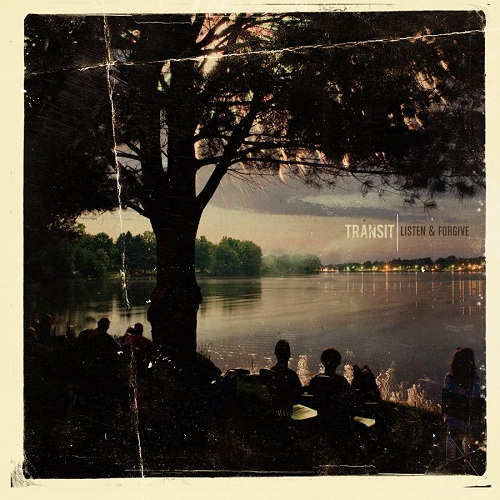
Transit - Listen & Forgive

There comes a time when an artist makes an album that is a perfect time capsule for when it was made. Some records have that sense of hope and beginning, which works well in the spring. Some records are happy-go-lucky with upbeat tones and work perfectly in summer (i.e. Yellowcard). Then there's the albums that have a mystique to them in a more somber tone that seem to work well in autumn. Other records have that powerful push to them and sense of discontent, which is how most of us feel in winter. This is one of those autumn albums. It's difficult to describe but you know it when you hear it, and that's what having a great attatchment to music is like. You can't quite put together why an album makes things feel the way it does, but you know it once you hear it.

Set among their peers, Transit is always talked about in the same pop-punk discussion as bands like Man Overboard, This Time Next Year, The Wonder Years, The Flatliners, etc., but on this album you can tell that they aren't happy with just being a part of the scene and that is clearly evident on their new album, Listen & Forgive. The songs you would hear on their previous album, Keep This To Yourself, were ones in the same vein as a pop-punk album, but the lines were clear; they were not to be lumped into any category. There isn't constant double-beat melodies or driving locomotive rhythms, the album plays out like an indie album made by a punk band. Transit takes that to the next level on their release.

Transit - Listen & Forgive


The record starts out with the track "You Can't Miss It (It's Everywhere)", setting the mood early for the album. Very upbeat intro with beautiful guitar work in the verse that transitions smoothly to the chorus melody and weaves as such throughout the song. Prime example of where Transit seperate themselves from their peers is on this track in the chorus. When other bands would build up to a sing-a-long friendly upbeat chorus, Transit instead works in a melodic lull that isn't immediatly catchy or uplifting, but is easy croon along with. The song features extensive backing vocals, which can be also said for the entire album.


From the start, the opening track encapsulizes what the entire album is about to bring: an abnormal landscape of an album that is built on a post-punk handbook. This album more than their previous releases, blends their influences together into a sound that is all their own. Melting a mix of Death Cab For Cutie, Bayside, American Football, and Hot Water Music; the album seems very content with what it is and rightfully so, it is a great listen. When talking about the album I'd group a few songs together to let you know what the songs collectively sound like. On this album however, I simply cannot do that. Each song is different, builds upon the one before it, improves the songscape that the album creates piece by piece.

"Long Lost Friends" starts out the same: with an intriguing guitar riff that keeps the atmosphere. The vocals and drums on this song compliment each other and are the two stand-out points. How the beat matches the melody of the vocals with the atmospheric guitar below it creates the autumn tone and blends to the chorus where the song comes together, embracing all of its parts. Next up is the title track, "Listen And Forgive", that starts out slower and keeps the mellow tone throughout. Featuring more extensive gang vocals throughout, the song is extremely vocally driven and the raw emotional power given off by the entire band's vocals summerizes the labor of love that this album is. "All Your Heart" is the first song on the album with guitarist Tim Landers doing lead vocals instead of primary vocalist, Joe Boynton. That change works extremely well, giving the song a different, more somber tone. The guitar work is still very admirable, the chorus is still something you'd sing with your friends, and the song weaves through the verses, the choruses, and the breakdown; building up to the ending.

Just like the drum-vocal melody before it, "Asleep At The Wheel" features more guitar-vocal melodies that makes it feel like an acoustic song. The track stays very mellow and is perfect for the ambient feel of autumn on the album. Having said all of that for the album so far, now is when it gets better. "Cutting Corners" may be my favorite track, using a different kind of intro and taking the rhythm they had before and then turning it up a little bit. The chorus is as close to pop-punk as the album gets and the guitar theatrics throughout the chorus, pre-chorus, and verses works very well. It's a shame that it's the shortest song on the album, but it ends very fittingly with a group vocal. "Skipping Stone" is the albums lone acoustic song about moving on and analyzing life. The mix of guitars sounds phenomenal, even as they take a backseat to the vocals most of the song. For nearly the entire track the band sings along, giving the more intimate feel that fits in so well on the album.

"I Think I Know" brings the pace back up at the start but lulls into a very ambient verse, building a very atmospheric sound to the album. Easily the most adventurous song on the album, the vocals don't seem strained and when the band gets involved in them, the song really takes off. It is at this point that you see an intimate, almost nostalgic, theme begins to form on the album. This can also be heard on "Don't Make A Sound", which builds from the verses to the choruses but keeps the rhythm and tone to what comes across as almost a waltz. The song's breakdown could be one of the brightest points on the entire album, holding onto the mellow tone until the track ends. If there is any song on this record that seems the most personal, it would be "1978". Very vocally driven, the song picks up to an anthemic, yet mellow, chorus with dual-vocal harmonies. The guitars work as a complimentary piece and the drumming is very tight, allowing the vocals to soar throughout the song, even with all of the different movements. Upon hearing it, this track just feels like an extremely personal song of longing and life, twisting through different movements and experiences.

"Over Your Head" starts the same way. Working a waltz-esque tone to a slow-yet-steady chorus, the song stays very mellow until the breakdown, which builds until it is an emotionally driven shout. The song also ends very strong by holding out the last few notes, as if to say that the song personifies all they have. Finally, it is make or break time, the closing track. "The Answer Comes In Time", encapsulates every little intricacy that the album ever featured: the guitar introductions, the group vocals, the slow and powerful breakdown, this song just shouts out "CLOSER" to you. The tone of the track is like a triumphant stance of what it has gone through, despite not sounding like it accomplished complete victory.

Overall the album is one of the best I've heard in a long time. I didn't consider myself a huge fan going into listening to it, but coming out I am a complete convert. This is an album that is falling leaves and a brisk breeze in stereo. I never used the word "fun" to describe the album, but it is. This is a really fun album that will be fun to play and sing along to with friends in a mellow atmosphere. Capturing the spirit of the season, Listen & Forgive has established Transit as a band that doesn't deserve to be lumped into genres, because they have already transcended everyone people have put them in.

Recommneded Tracks: "Cutting Corners", "I Think I Know", "1978"

Recommended If You Like: "The Big Deep" by The Sleeping, "The Glass Passenger" by Jack's Mannequin, "Suburbia..." by The Wonder Years

Verdict: 8.5 / 10

Wednesday, October 5, 2011

New Found Glory - Radiosurgery

It was under ten years ago that my oldest brother took me under his wing and took me to my first gig. He was a freshman in college here in Lincoln at the University and I was just 12 years-old, a bright eyed sixth grader. He came back for a weekend to pick me up in his 2001 Ford Focus that we called the "bumblebee" for its goldish-yellow color. The destination was Pershing Auditorium and the mission was to see New Found Glory. It was at this show that I believe my life changed. The pure energy and excitement that came erupting out off that band and the crowd got to me, and perhaps changed the way I look at life.

Return to present-day Lincoln, where I have now lived for three years. In the time since my first encounter with New Found Glory, I have seen them live five times. Which is a lot considering that sports in high school limited my engagement to shows. They have just released their seventh album and are on my schedule to see on their upcoming tour. So you can understand why I have a critical eye on this band. With their new album comes excitement, optimism, and a review.

New Found Glory - Radiosurgery


The album starts off with the first single/title track. This is the prime example of what the new album encompasses as a whole sound. Following the conventional formula of song structure, the track radiates a "Dookie"-vibe. At first listen, it didn't hit me, but after listening to it a few times you can see where the song could have fit on any early Green Day album. Still very fun and catchy, NFG put their stamp on every song they make, and give us a late-summer anthem.

The next few songs are my favorites on the album. "Anthem Of The Unwanted" and "Drill It In My Brain" are both vintage New Found Glory with an upbeat, charisma to the music and toned-down catchy chorus. "I'm Not The One" brings back the gang vocals with a hardcore breakdown and different movements with composition. "Dumped" is a very musical locomotive, vintage NFG song with a catchy upbeat chorus and a noteworthy ending.

It's at that point where the album takes a slight downturn. "Summer Fling, Don't Mean A Thing" is a somewhat forgettable, cookie-cutter song, that sounds like it could be a b-side off of Coming Home. "Caught In The Act" and "Trainwreck" share the same fate. It's not a complete knock on slower songs, or less musically driven songs, but in some cases the efforts just seem lazy. Such is the case here. The songs don't capture attention the first time and make it very easy to skip ahead to the next songs on the album that are a lot less forgetful.

The few bright points on the back half of the album, "Memories And Battle Scars" and "Map Of Your Body" don't do enough to resurrect the album from the doldrums. Coming out with strong riffs, very catchy choruses, and notably well executed breakdowns, the songs hold your attention and almost force you to sing along. In the case of the album closer, "Map Of Your Body", the breakdown takes the form of a sort of lullaby. As soon as the breakdown ends, the song shoots off like a rocket back to the catchy chorus for the ending.

Overall, the album features a few good songs, a few decent ones, and a few forgettable ones. I recognize that at some points I may sound like I want them to recreate their self-titled album or Sticks And Stones, but I know that what goes into making an album can't be reproduced and getting repeated success on albums is extremely difficult. NFG came back from a lackluster showing with Not Without A Fight, an album I very much enjoyed. Time will tell if I enjoy Radiosurgery as much as I did with NWAF that came before it, but it's not looking good. For fans of old-school Green Day who haven't gotten into New Found Glory (if those people exist) should give this album a listen. If you're a hardcore New Found Glory fan, you should listen to this album because it's the exact things you've come to like in them. But in the long run, the album hits the target a few times not enough and lets the lacking parts last too long.

Recommended Tracks: "Anthem Of The Unwanted", "I'm Not The One", "Dumped"

Recommended If You Like: New Found Glory, Dookie

Verdict: 5.5/10

Thursday, September 29, 2011

This Time Next Year - Drop Out Of Life

In 2009, This Time Next Year burst onto the scene with a full-length powerful enough to turn goat piss into gasoline (just watched Blues Brothers). Taking their name from the Movielife album, This Time Next Year came out of nowhere to release on of the best pop-punk albums of that year, as well as one of the best modern pop-punk releases. Road Maps And Heart Attacks took cues from legends of the scene as well as TTNY's peers to formulate a record enjoyable from start to finish. Two years later, how does the band mature and does it suffer from the sophomore slump on Drop Out Of Life? Let's find out.

The closest thing to Road Maps And Heart Attacks can be found on the lead, title track, "Drop Out Of Life". The song starts out strong and follows the new pop-punk formula to a tee. The anthem-like chorus is something that crowds will be singing back to the band on every stop of every show. From there, the album takes an unexpected turn. The rest of the album is generally mellow with not a lot of the power or aggression we came to expect from their previous releases. The track "Better Half" resonates something that would be on a Starting Line album and it becomes evident that the band took cues from the album's producer, Chad Gilbert (guitarist from New Found Glory). The New Found Glory influence also shines on "Get It, Got It, Good", which rings reminiscent of the NFG song "Don't Let Her Pull You Down". Songs like "Living Hell" and "Matchbook" bring the 'friend-core' aspect of pop-punk, with a potent nostalgia feeling when listening to the song, as if it makes you remember the times you've spent with friends.

In a nutshell the album can be summarized with songs like "Modern Day Love Story" and "My Side Of Town". Catchy choruses, but extremely mellow with somewhat of a waltz tone to them. Other than "mellow" the other big 'M' word for this album is "melody". Neat vocal melodies are shown throughout the majority of this record, with "Spoontonic" being the prime example of this. The vocals never rest on a certain note or range, they are always moving swiftly back and forth, using different "riffs" and using the vocals almost like another instrument.

It's been said before by me that the opener to an album is the most important, and then the ending. This album starts with its strongest foot forward and ends with a song that isn't one of the finest, but clearly the greatest choice for closing track. "This Is An Airport Train" has a stand-out guitar tone throughout the entire song to go with the perfect mix of vocals, lyrics, and overall band tone. The lyrics speak of moving on and carrying the torch of living, which is complimented by the "traveling" tone of the music accompanying the words. It's an uplifting song that speaks of previous depression that has been turned to hope.

Overall, the album is (at least for me) a disappointment compared to their previous release. Maybe it's because this is a much mellower album and doesn't pack the same punch, but it seems like that's what This Time Next Year is best at. A few songs pack the same powerful sonic punch that was found on their previous album, but they are few and far between. Maybe Drop Out Of Life isn't the same breed of monster as we're used to from the band, but it also may be the next logical step in maturing. Maturity is a four letter word in the pop-punk world, but these guys speak of going through the gauntlet and that can do a lot to a man.

Recommended Tracks: "Drop Out Of Life", "Get It, Got It, Good", "This Is An Airport Train"

Recommended If You Like: New Found Glory, The Starting Line, old All Time Low

Verdict: 6 / 10

Wednesday, September 28, 2011

Man Overboard - Man Overboard

There comes a time when an album is recorded, mixed, mastered, pressed, and released all at the perfect time for that particular album. The time for Man Overboard's new self-titled album is the exact day that it is released. With a vintage pop-punk sound mixed with some powerful guitar work, this band has proven that their previous release, Real Talk, was not a fluke.

I have always said that a key factor in my way of reviewing albums is the way it begins. The way that an album starts out can either express what the following songs will be like, or introduce you to the music like a prologue. In the manner of Man Overboard, the opener fires out with an exhilerating rush of frantic drums and locomotive guitars. One of my favorite tracks on the album, "Rare" is the kind of album opener that personifies what the old-school pop-punk scene was about: the catchy anthemic chorus with likable melodies. The melody on this track changes from verse to chorus, seeming somewhat sloppy at first, but after a few listens it appears more polished.

Songs like "Teleport" and "Picture Perfect" seem to dial back the tone, but still not embracing the slow dance aesthetic. The track "Voted Most Likely" is the kind of song that is belted out by you and your car full of friends driving in the city at night. One of the standout components in this album is how the melody of the rhythm and lead guitars don't sync, and neither do the vocals and rhythm guitar. It's as if the rhythm guitars are on a whole different riff, but keeping the same general rhythm and tone as the rest of the song. "Something's Weird", "Headstone", and "Punishment" are great examples of this. "Spunn" is a notable track on this album for its "time capsule" feel, because it has a noticable aura of an old-school punk song despite a short piano interlude in the middle of the song.

While the beginning of the album is a landmark of a great album, the ending is also highly important to see if it fits in the general aspect of the album and summerizes the feel of the music. "Night Feelings" is a fun song that encorporates the melodic chorus, guitar-heavy intro and breakdown, as well as an abrubt ending that fits the song uniformly. Ultimately, the end of the album comes with "Atlas", a slow and building song with more emotional vocals than is heard on most of the album. The song culminates with an orchestra of power and energy as the final note rings through the speakers until it finally fades away.

Man Overboard's previous release took me awhile to get into, but once I fully came to enjoy it, the album was one of my more played records at the time. This time around, Man Overboard struck me immediatly and has commanded great control over my speakers. On rare occassion will you have an album that is back-heavy (with some of the best songs later on the track listing), but this record has most of its bright points on the later half. It's a fun album that encorporates everything that is great about pop-punk. It may not be a genre altering release, but it is a record that stands among some of the elite of it's kind right now and has secured the band a spot among the best right now.

Recommended Tracks: "Rare", "Headstone", "Spunn", "Night Feelings"

Recommended If You Like: The Wonder Years, New Found Glory, Pop-punk

Rating: 8 / 10

Wednesday, August 3, 2011

Bring On The Sunburn

Sorry about the lack of correspondence, I just recently moved into a new apartment and it has taken me a few days to get everything situated.

Another big issue is the lack of anticipated releases in the last few weeks. Everything for the rest of the year is going to becoming out in the fall and so the last few weeks have been somewhat lackluster. Having said that, there will be reviews and articles written about a few new releases including Set Your Goals' "Burning At Both Ends", and Portugal The Man's "In The Mountain In The Cloud".

But before any of that, a friend (and bandmate) of mine and I are going to attend the Council Bluffs, IA stop on the Warped Tour. It's been awhile since my last time attending a show (All Time Low/Hey Monday/Yellowcard to be exact), so I anticipate a fun time. We will try and take pictures and come back with stories. Excited to get to see Set Your Goals again, extremely excited to see The Dangerous Summer play new material live, and finally brimming with excitement to see The Wonder Years kill it again. This may be a trip that makes me go broke, but it's one that is much needed.